



Skip to content

-5% de remise supplémentaire sur tout notre OUTLET avec le code EXTRA5

Dès 150€ d’achats chez Serax, une carafe Fish&Fish est offerte. Ajoutez-la à votre panier !

BLACK MONTH Xmas Shop
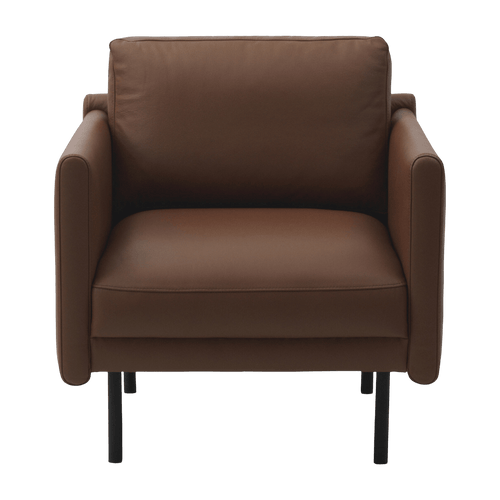
Normann Copenhagen Rar armchair in cognac leather in a bright living room

Buying guide

Which armchair should you choose for reading, relaxing or watching TV?

An armchair is chosen on five dimensions and a use: reading, dozing in front of a film, entertaining, or simply dressing a corner. This guide provides comfort benchmarks, space requirements and compares twelve armchairs from the catalogue.

12 models compared5 usesupdated September 2026

Find your armchair in 30 seconds

1 / 4

What will this armchair be used for?

The use determines the seat height, depth and backrest.

What silhouette?

A lounge chair envelops, a compact one fits anywhere, a high back supports the neck.

Which material appeals to you?

Wood can be repaired, leather develops a patina, fabric adds warmth, rattan lightens.

What budget do you have in mind?

The manufacturer, upholstery and solid wood account for most of the price difference.

Passer et lire le guide

Our recommendation

Deux alternatives sérieuses

Key takeaways

For reading, choose an armchair with a high back or headrest, 100 cm tall or more, with a seat 40 to 45 cm high and 45 to 55 cm deep, armrests 18 to 25 cm above the seat and a footrest. Allow 70 to 90 cm wide for a lounge chair, 60 to 70 cm for a compact one, and 60 cm of clearance around it.

  • Seat height: 38 to 42 cm for a lounge chair, 43 to 45 cm to stand up effortlessly.
  • Seat depth: 45 to 55 cm; beyond that, a lumbar cushion becomes necessary.
  • For reading or dozing: backrest of 100 cm and above, or headrest, and footrest.
  • Width: 60 to 70 cm for a compact chair, 70 to 90 cm for a lounge chair; 60 cm clearance around.
  • Reading light: behind the shoulder, on the opposite side to the hand turning the pages.

The Dimensions to Know

No standard defines the comfort dimensions of an armchair: the benchmarks below are usage benchmarks from ergonomists and manufacturers, named as such. The dimensions of the models cited are those written in their title, in our armchair collection; the order of these dimensions varies by manufacturer, check the product sheet before measuring.

Armchair dimensions

An armchair is described by five dimensions: the width overall, including armrests; the depth on the floor; the seat height, from the floor to the top of the cushion; the seat depth, from the front edge to the backrest; the total height, which indicates whether the backrest supports the neck. The first two indicate whether the armchair fits in the room, the last three whether it suits your body.

Standard armchair dimensions

There is no standard armchair, but three size families. The compact ones fit within 60 to 70 cm wide: the Série 366 by 366 Concept (66 x 64 cm), the Chisel by HAY (66 x 63 cm), the Limit by Normann Copenhagen (70 x 68 cm). The lounge armchairs occupy 70 to 90 cm: The Seal by Audo (77 x 80 cm), the Rar by Normann Copenhagen (79 x 87 cm), the Wulff by &tradition (85 x 85 x 84 cm). The large armchairs exceed 90 cm, like the Hunk by Hem with armrests (85 x 102 x 72 cm).

Armchair size

To know whether an armchair fits, add to its floor footprint 60 cm of passage in front and on the frequently used side, and 40 to 50 cm in front of it if you add a footrest. A lounge of 80 x 85 cm with its footrest thus requires a surface of approximately 1.40 x 1.90 m. In a bedroom or small living room, a compact of 65 cm wide leaves room for a lamp and a side table.

Armchair height

Two heights matter. The seat height of an armchair is between 38 and 45 cm, lower than a dining chair: around 38 to 40 cm, you sink in and stretch your legs; around 43 to 45 cm, you sit upright and stand up without effort. The total height ranges from 70 cm for a low backrest to over 100 cm for a high backrest that supports the head: this is the decisive dimension for reading or dozing.

One-seater armchair dimensions

A comfortable one-seater armchair offers a seat 50 to 55 cm wide between the armrests and 45 to 55 cm deep. Below 45 cm seat depth, the thighs are no longer supported; beyond 55 cm, the back no longer touches the backrest without a cushion, unless you fold your legs, which lounge enthusiasts seek. The table below summarises the benchmarks by type of armchair.

The Dimensions to Know
Type of armchairOverall widthSeat heightBackrest heightWhat for
Compact, tub chair, occasional armchair 60 to 70 cm 40 to 45 cm 70 to 85 cm bedroom, small living room, conversation
Lounge 70 to 90 cm 38 to 42 cm 70 to 85 cm relaxation, legs stretched out
High-back reading armchair 70 to 90 cm 40 to 45 cm 100 cm and above reading, neck supported
Swivel or reclining 70 to 90 cm 40 to 45 cm 80 cm and above television, nap
Rocking chair 60 to 70 cm 38 to 45 cm depending on the model rocking, relaxation

Usage guidelines: seat height 38 to 45 cm; seat depth 45 to 55 cm; backrest 100 cm and above to support the head; 60 cm clearance around the armchair, 40 to 50 cm more with a footrest.

Normann Copenhagen Rar armchair in cognac leather facing a matching sofa, around a coffee table, in a bright living room
Normann Copenhagen Rar, 79 x 87 cm in the title: an armchair is measured including armrests, then in floor depth.

View the Armchairs collection →

Wing chair, bergère or club chair: which one for reading?

An armchair designed for reading is simply called a reading chair. Three classic families serve this purpose: the wing chair, the bergère and the club chair. Each responds differently to the three needs of the reader: supporting the head, resting the arms, keeping the back against the backrest.

The wing chair

The wing chair has a high back, extended on each side by two padded panels called wings. The wings support the head when it tilts to the side. The wing chair is the family best suited to long reading sessions or naps. It is also the tallest: expect a backrest of 100 cm and above, the practical benchmark used in this guide for supporting the head.

The bergère

The bergère is a French armchair born in the 18th century, wide and deep, with solid, upholstered armrests and a removable seat cushion. The bergère envelops the torso and supports the elbows, which suits a book held in both hands. Its backrest often stops below the nape: the head is only supported on versions with wings.

The club chair

The club chair is a low leather armchair with rounded shapes, which appeared at the beginning of the 20th century. Its deep seat and low backrest serve conversation and relaxation more than prolonged reading: the nape remains without support, and the low seat complicates getting up for a sensitive back.

The equivalents amongst contemporary publishers

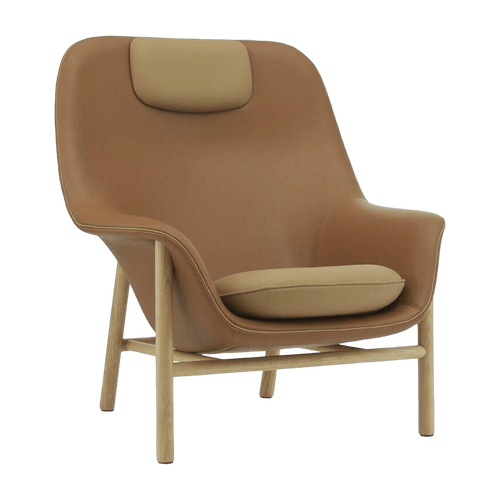
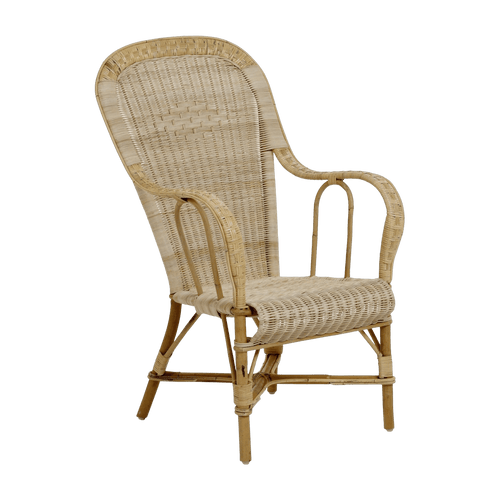
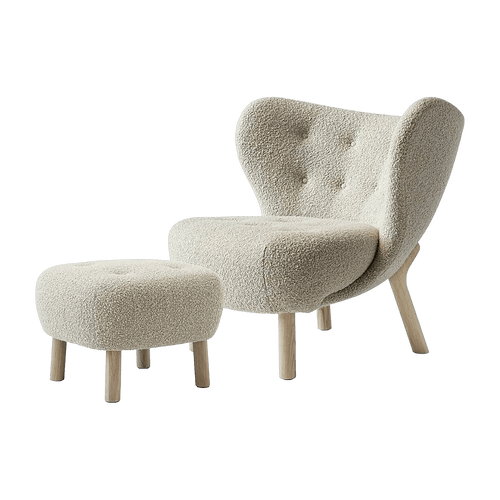
Design publishers take up these functions without taking up the names. The high back of the wing chair is found in the Drape by Normann Copenhagen with headrest (103 cm high), the Grand-père by KOK with high back (105 cm) or the Era high by Normann Copenhagen (103 cm). The enveloping quality of the bergère is found in the Little Petra by &tradition. The leather of the club chair is found in The Seal by Audo or the Rar by Normann Copenhagen. See all armchairs.

Wing chair, bergère or club chair: which one for reading?
FamilyBackrestArmrestsHead supportMain use
Wing chair high, with two side wings solid yes, including on the side long reading, napping
Bergère medium to high solid and upholstered only on wing versions reading, relaxing
Club chair low and rounded wide, in leather no conversation, relaxing

For reading for more than an hour, the criterion that distinguishes these three families is the height of the backrest: 100 cm and above, or a headrest.
The Seal armchair by Audo in brown leather and light wood, beneath a reading floor lamp, against a wooden wall
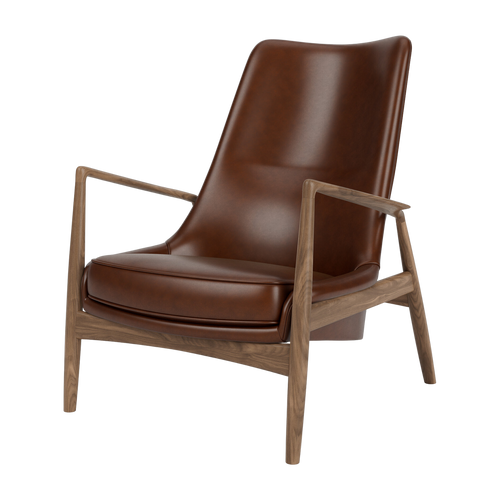
Audo The Seal in brown leather, 77 x 80 cm in the title: a reclined backrest for long reading sessions, a reading light positioned behind the shoulder.

View the Armchairs collection →

An armchair for reading: backrest, footrest and light
Reading for an hour or more in the same position: a reading chair must support the head, arms and legs. Three elements make the difference.

A backrest that supports the neck

A high backrest, or a headrest, allows you to relax your neck without your head tilting backwards. The Drape by Normann Copenhagen is available with a headrest, The Seal by Audo in a high-back version, the Grand-père by KOK in high-back rattan, and the Muno by &tradition with a high back. A slightly reclined backrest remains more restful than an upright one, provided the seat height allows you to stand up.

Armrests at the right height

The practical guideline: armrests 18 to 25 cm above the seat, on which your elbows rest when holding a book or an e-reader. Too low, your shoulders drop; too high, they rise towards your ears after one chapter.

A footrest

Stretching out your legs relieves the lower back and makes all the difference during a long reading session. Some armchairs are sold with their own: Little Petra by &tradition with its pouf, Hai by Hem and Softy by Hübsch with footrests. Otherwise, a firm pouf at seat height, or slightly lower, does the job. See footrests and poufs.

Lighting for the reading corner

The light comes from behind the shoulder, on the opposite side to the hand turning the pages, so as not to cast a shadow on the page. A reading floor lamp placed behind the armchair, such as the Flowerpot VP12 by &tradition (122 cm) or the Ixa reading floor lamp by Artemide, directs the light onto the page. Our room-by-room lighting guide provides the recommended wattages. See floor lamps and reading lamps.

The Seal armchair by Audo in brown leather and light wood, beneath a reading floor lamp, against a wooden wall
Audo The Seal in brown leather, 77 x 80 cm in the title: a reclined backrest for long reading sessions, a reading light positioned behind the shoulder.

View the Floor lamps collection →

Drape, The Seal or Little Petra: which one to choose for reading?

The Drape by Normann Copenhagen, The Seal by Audo and the Little Petra by &tradition are three armchairs from Danish publishers often compared for a reading corner. They don't meet the same need: the first supports the head, the second focuses on leather, the third on compactness and its pouf.

Drape by Normann Copenhagen: the nape first

The Drape exists with or without headrest, on oak or steel base. With headrest, the Drape measures 93 cm wide, 84 cm deep and 103 cm high according to its specification sheet: the head is supported. Without headrest, the Drape's height drops to 85 cm. For reading, choose the version with headrest and allow 93 cm of width in the room. See the Drape with headrest in oak.

The Seal by Audo: leather and two backrest heights

The Seal exists in low back and high back, in leather or wool. The lounge version in leather shows 77 x 80 cm in its title. For reading, choose The Seal with high back in leather and walnut, and check the total height on the specification sheet before measuring. The leather develops a patina and wipes clean with one gesture.

Little Petra by &tradition: compact, with its pouf

The Little Petra VB1 measures 79 cm wide and 75 cm high according to its specification sheet: the backrest is low and the head is not supported. Its asset lies elsewhere: an enveloping seat in wool or sheepskin, and a matching pouf (53 x 53 cm, 37 cm high) that extends the legs. The Little Petra is suitable for an hour's reading in a bedroom or small living room. See the Little Petra with its pouf in beige wool and the &tradition armchairs.

Drape, The Seal or Little Petra: which one to choose for reading?
CriterionDrape, Normann CopenhagenThe Seal, AudoLittle Petra, &tradition
Versions with or without headrest; oak or steel low back or high back; leather or wool alone or with pouf; wool or sheepskin
Dimensions noted 93 × 84 cm, 103 cm high with headrest 77 × 80 cm as standard (lounge in leather) 79 cm wide, 75 cm high
Head support yes, with headrest yes, in high-back version no
Legs footrest to add footrest to add matching pouf 53 × 53 cm
Primary reading use long reading, napping reading and relaxing, leather appeal short reading, small space

Criteria for a sensitive back (usage guidelines): seat 43 to 45 cm high, 45 to 50 cm deep, firm; full armrests; high backrest. For persistent pain, seek advice from a healthcare professional.
&tradition Muno armchair with high back and armrests, upholstered in green fabric, next to a floor lamp in a mineral room
&tradition Muno LN17: a high backrest and armrests, two supports for sitting down and standing up without straining.

View the &tradition Armchairs collection →

Relaxing and watching TV: reclining, swivel, footrest
The relaxer armchair

Strictly speaking, a relaxer armchair reclines its backrest and raises a leg rest, manually or by motor. The catalogue favours another approach: fixed armchairs, wide and enveloping, paired with a footstool. Pomax thus calls relaxer armchairs its Hailey in boucle (66 x 75 x 77 cm) and its Aosta in buffalo leather (65 x 76 x 70 cm). Before purchasing, check on the product sheet whether the backrest reclines or not.

The swivel armchair

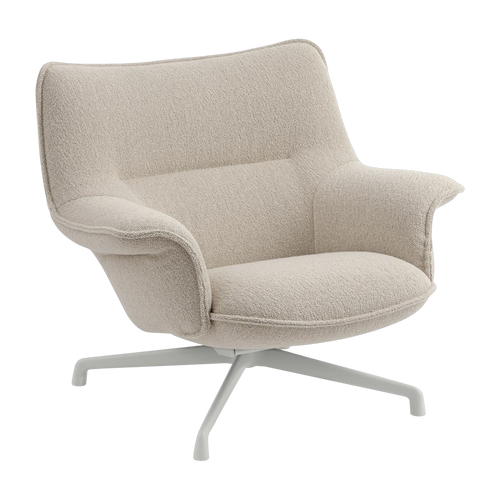
A swivel armchair turns towards the screen, then towards the conversation or the window, without being moved. The Doze by Muuto sits on a swivel steel base, like the Eden and Bubba by Zuiver or the Burra by Normann Copenhagen. Leave 20 to 30 cm free around the backrest so it can turn without hitting the wall. See swivel armchairs.

Positioning the armchair facing the screen

The television armchair is positioned slightly at an angle, so that the gaze falls on the centre of the screen without turning the head. A backrest high enough to rest the neck prevents sliding forward as the film progresses. Keep a side table within reach for the glass and remote control, and a soft lamp to avoid watching the screen in the dark. Matching footstools are in the footstool collection.

Muuto Doze swivel armchair in beige fabric with footstool, in a living room with pale green walls and bookshelf
Muuto Doze, grey steel swivel base: it turns towards the screen in the evening and towards the room the rest of the time.

View the Swivel Armchairs collection →

Swivel armchair or fixed armchair for reading and watching TV?

The same armchair can be used for reading and watching television. The choice between a swivel armchair and a fixed armchair depends on the room, the height of the backrest and the person sitting in it.

When to choose a swivel armchair

A swivel armchair is suitable for an open-plan living room where the screen, the window and the sofa are not aligned. It turns towards the screen, then towards the reading lamp, without being moved. Check the backrest height: the Normann Copenhagen Era high rises to 103 cm and supports the head, whereas the Muuto Doze (95.5 x 86 cm, 78 cm high) and the Normann Copenhagen Burra (95 x 79.5 cm, 72.5 cm high) stop below the nape of the neck. See swivel armchairs.

When to choose a fixed armchair

A fixed armchair is suitable for a reading corner set up once and for all, with the lamp behind the shoulder. It does not turn when you lean on the armrests to stand up, which reassures an elderly person or someone with a sensitive back. Placed at an angle, halfway between the screen and the lamp, a fixed armchair with a high backrest such as the Drape with headrest serves both purposes.

The lamp pitfall with a swivel armchair

A swivel armchair changes direction, the lamp does not. Position the floor lamp so that the light comes from behind the shoulder in the reading position, not in the television position. Keep 20 to 30 cm clear around the backrest so that the armchair can turn without touching the lamp or the wall.

Swivel armchair or fixed armchair for reading and watching TV?
CriterionSwivel armchairFixed armchair
Reading and watching TV turns towards the screen or towards the lamp to be placed at an angle, between the screen and the lamp
Space required footprint plus 20 to 30 cm around the backrest footprint plus 60 cm walkway
Head support depending on the model: 103 cm for the high Era, 78 cm for the Doze depending on the model: 103 cm for the Drape with headrest
Support for getting up the seat can turn under the support the seat stays in place
Typical room open-plan living room, several points of interest reading corner, bedroom, living room corner
Pomax Aosta armchair with leather strap seat on wooden frame, in front of a fireplace, on a light-coloured floor
Pomax Aosta, buffalo leather and acacia wood: the leather develops a patina and wipes clean, to be nourished once or twice a year.

View the Swivel Armchairs collection →

Sensitive back: the criteria that matter

An armchair does not treat back pain, and persistent pain requires a healthcare professional. However, certain features make an armchair easier to live with when the back is sensitive.

A seat high enough to stand up from

A seat height of 43 to 45 cm, rather than a lounge chair at 38 cm, allows you to stand up by pushing on your legs, without tilting your torso forward. This is the first criterion for an elderly person or a stiff back.

A firm seat that is not too deep

A seat depth of 45 to 50 cm keeps the lower back in contact with the backrest. A very soft seat sinks and rounds the back; a firm cushion supports it. A small lumbar cushion fills the gap if the seat is deep: see cushions.

Supportive armrests and a high backrest

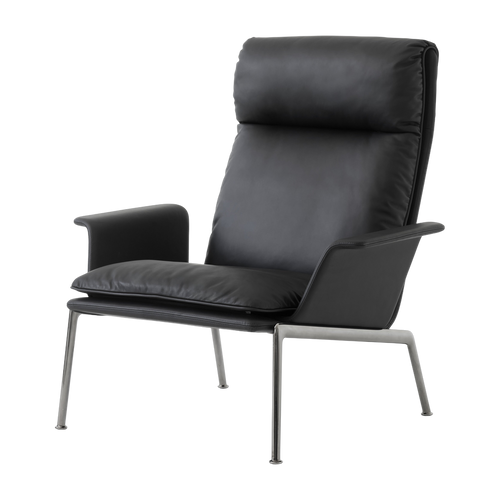
Solid armrests serve as support when standing up and sitting down; a high backrest relieves the neck. The Muno LN17 by &tradition combines a high backrest and armrests, the Era by Normann Copenhagen is available in a high swivel version, the Hunk by Hem in a version with armrests. Models with a wooden frame and solid armrests can be found in wooden armchairs.

Criteria for a sensitive back (usage guidelines): seat height 43 to 45 cm, depth 45 to 50 cm, firm; full armrests; high backrest. For persistent pain, seek advice from a healthcare professional.
&tradition Muno armchair with high back and armrests, upholstered in green fabric, next to a floor lamp in a mineral room
&tradition Muno LN17: a high back and armrests, two supports for sitting down and standing up with ease.

View the Wooden Armchairs collection →

Small living room, bedroom, office nook: compact armchairs
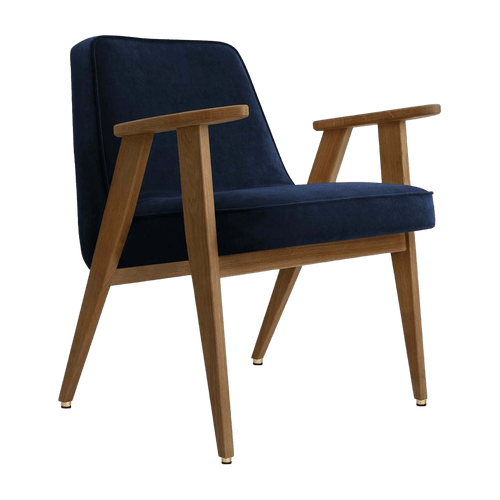
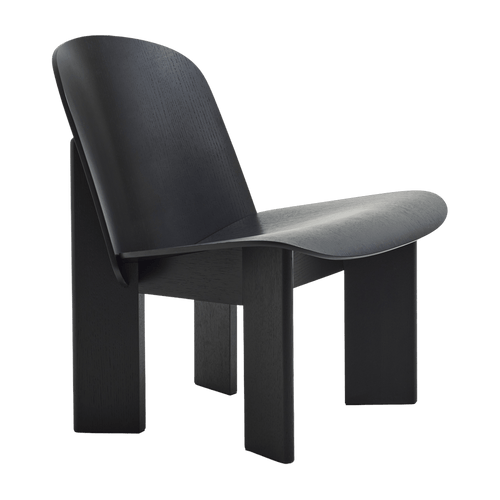
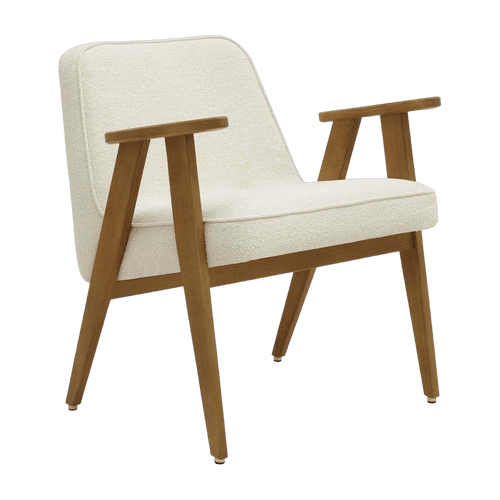
An armchair 60 to 70 cm wide fits at the foot of a bed, near a window or opposite a sofa in a living room of less than 15 m². The Series 366 by 366 Concept (66 x 64 cm), a Polish reissue in velvet or bouclé on dark oak, the Chisel by HAY in beech (66 x 63 cm), the 270F by Verpan in lacquered birch (65.5 x 60 x 74 cm) and the Limit by Normann Copenhagen (70 x 68 cm) are good examples. Choose exposed legs and an open or low backrest: the armchair looks lighter and reveals the floor. Black versions, easy to match, are in black armchairs.

Black HAY Chisel armchair next to a beige sofa and wooden coffee table, on a light-coloured rug
HAY Chisel in black beech, 66 x 63 cm: a compact armchair that fits perfectly at the end of a sofa.

View the Black Armchairs collection →

Reading in the bedroom in the evening without disturbing sleep

A reading armchair in a bedroom allows you to read in the evening without turning on the ceiling light or disturbing the person sleeping. Three choices matter: a compact armchair, narrow and warm lighting, and a location away from the bed.

A compact and silent armchair

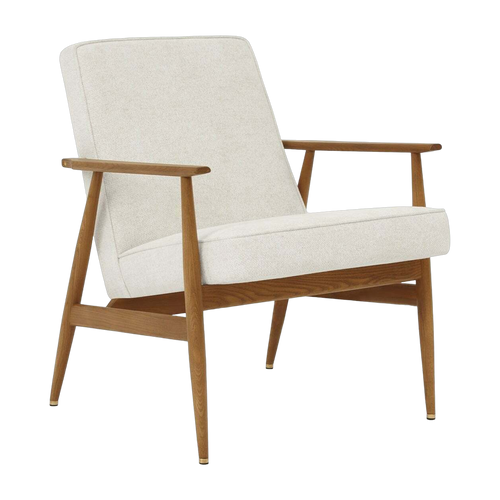
In a bedroom, an armchair 60 to 70 cm wide is sufficient and leaves passage to the bed. The Série 366 by 366 Concept in cream bouclé (66 × 64 cm, 75 cm high), the Fox by 366 Concept in bouclé with armrests (70 × 62 cm) and the Tenon by New Works in oak and bouclé (64 cm wide, 73 cm high) fit this size. A fixed armchair on four legs does not creak or tip when you stand up in the half-light. These low backs do not support the head: add a cushion behind the neck for extended reading.

A reading light with a narrow beam and a warm white bulb

A reading light illuminates the page and not the room. Choose a reading floor lamp with an adjustable head, such as the Flowerpot VP12 by &tradition (122 cm), or a reading wall light fixed to the wall behind the armchair. Turn the reflector away from the bed. For the shade, choose a warm white bulb, around 2,700 K, and a dimmer if the lamp accepts one. See reading lights and LED bulbs.

Installing the bedroom reading corner in four steps

  1. Measure the free corner furthest from the pillows: you need the width of the armchair plus 60 cm of passage.
  2. Place the armchair with its back to the bed or sideways, so that the light does not reach the person sleeping.
  3. Position the reading light behind the shoulder, on the opposite side to the hand that turns the pages.
  4. Add a low pouf and a side table: allow an extra 40 to 50 cm in front of the armchair.

Bedroom guidelines: armchair 60 to 70 cm wide, 60 cm clearance, reading light positioned behind the bed, warm white bulb around 2,700 K.
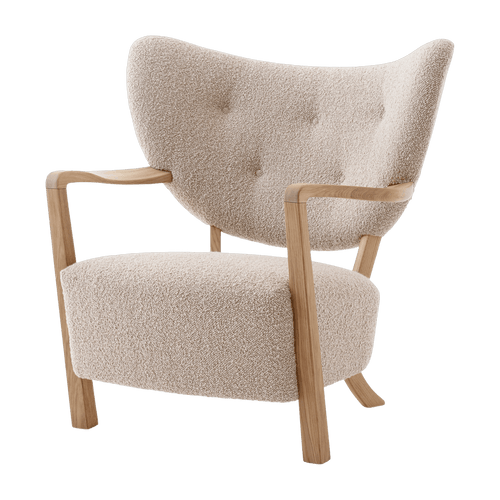
&tradition Wulff armchair in white bouclé wool near a window, facing a red sofa, on herringbone parquet flooring
&tradition Wulff ATD2, 85 x 85 x 84 cm: oiled oak and wool, one of the Danish publisher's reissues.

View the Reading Lights collection →

Wood, rattan, leather, wool or bouclé: how material makes all the difference
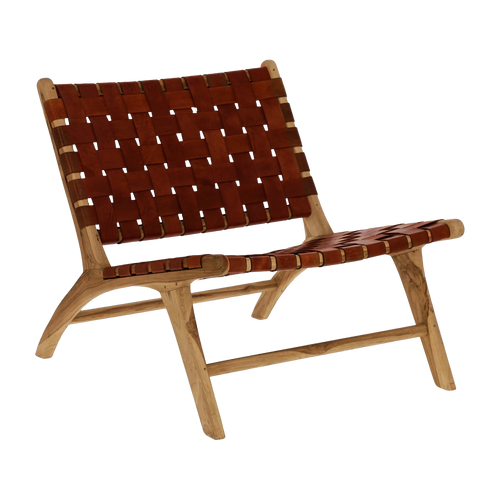
Exposed wood

Oak, walnut, beech or birch left visible (Chisel by HAY, Series 366, CH45 by Carl Hansen & Søn) lighten the silhouette and can be repaired. See wooden armchairs.

Rattan

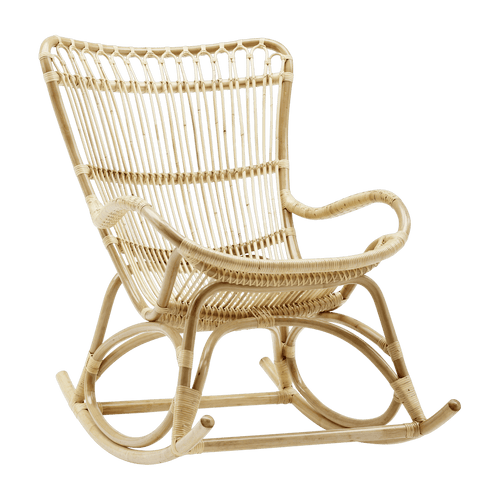
Light and flexible, it gives a chair that breathes, for a veranda or a bedroom: Grand-père by KOK, Monet by Sika Design. It fears direct sunlight and dryness. See rattan armchairs.

Leather

Leather (The Seal by Audo, Rar by Normann Copenhagen, Aosta by Pomax) develops a patina, wipes clean and lasts a long time, provided it is nourished once or twice a year and kept away from radiators. See leather armchairs.

Wool, bouclé and velvet

Wool (Hunk by Hem, Little Petra by &tradition) is warm and resistant; bouclé (Hailey by Pomax, Softy by Hübsch) hides marks but catches cat claws; velvet (Series 366) catches the light and shows the trace of a hand. See velvet armchairs.

Pomax Aosta armchair with leather strap seat on wooden frame, in front of a fireplace, on a light-coloured floor
Pomax Aosta, buffalo leather and acacia wood: the leather develops a patina and can be wiped clean, should be conditioned once or twice a year.

View the Rattan Armchairs collection →

Throw and cushions: dressing an armchair

How to put a throw on an armchair

Three ways, from the simplest to the most structured. On the armrest: fold the throw lengthways in three and let it fall over an armrest, within easy reach. On the backrest: fold it in half, lay it across the top of the backrest and let one side fall onto the seat, one corner lower than the other. On the seat: unfold it over the entire seat and tuck the edges between the cushion and the backrest, to protect a light-coloured fabric.

How to tie a throw on an armchair

To stop a throw slipping off a leather or velvet armchair, pass it around the backrest and tie the two corners at the back, without tightening; the knot remains invisible from the front. A wool or thick cotton throw holds better than a fleece throw.

How to put a throw on a tub chair

The tub chair, low and enveloping, has little visible backrest: lay the throw diagonally over one corner of the backrest and let the point fall onto the seat, or fold it over an armrest. Avoid covering it entirely, its shape is its charm. For an armchair, a throw of 120 to 130 x 170 to 180 cm is sufficient, the 150 x 200 cm formats being better suited to the sofa; match the colour of a cushion. See throws.

Hübsch Softy armchair in dark blue boucle with a striped cushion, a bouquet of tulips on a side table
Hübsch Softy in dark blue bouclette: a light cushion is enough to brighten up a dark armchair.

View the Throws and Bedspreads collection →

The rocking chair: rocking gently

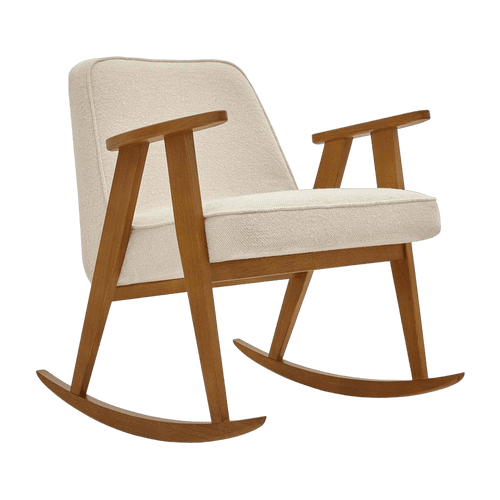
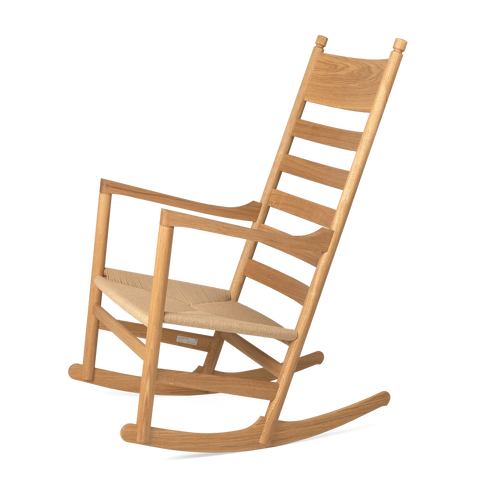
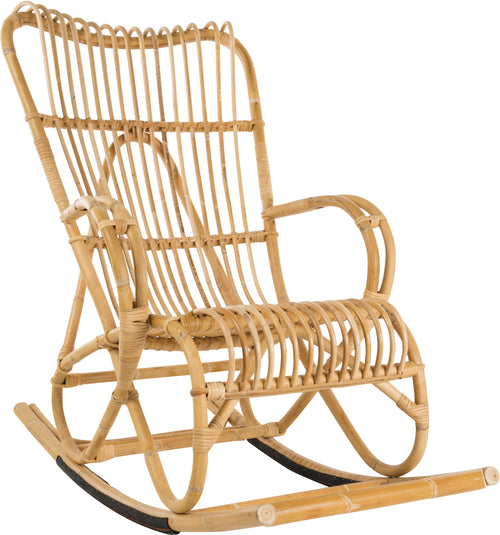
The rocking chair rocks on two curved runners: it relaxes, helps parents soothe a baby to sleep and makes a calming reading armchair. It requires space: allow 30 to 40 cm free behind and in front of the runners so it can rock without hitting a wall or table. The catalogue ranges from the 366 Concept Series 366 rocking chair (70 x 64 cm) to the Carl Hansen & Søn CH45 in oiled oak and natural cord (106 cm), including the Sika Design Monet in rattan. On wooden floors, check the condition of the runners: felt or a clean runner prevents scratches. See rocking chairs.

Two Carl Hansen & Søn CH45 rocking chairs in oak in a large glass-walled room with light flooring
Carl Hansen & Søn CH45 in oiled oak and natural cord, 106 cm: allow 30 to 40 cm of clearance in front of and behind the runners.

View the Rocking armchairs collection →

Which armchair brand to choose

&tradition (Denmark) reissues the Little Petra, an armchair in wool or sheepskin on oak or walnut legs, sold alone or with its pouf, and publishes the Wulff and the Muno. See &tradition armchairs.

Normann Copenhagen (Denmark) covers reading (Drape with headrest), television (Burra and Era swivel) and small spaces (Limit). See the brand Normann Copenhagen.

Carl Hansen & Søn (Denmark) publishes solid wood armchairs, including the CH45 rocking chair in oiled oak and natural cord. See the brand Carl Hansen & Søn.

Hem (Sweden) offers the Hai, with or without footrest, and the Hunk in wool, with or without armrests. See the brand Hem.

366 Concept (Poland) reissues the Series 366 armchair in velvet, in bouclé and in rocking version. See the brand 366 Concept.

Muuto (Denmark) designs the Doze, an armchair on swivel base with its matching footrest. See the brand Muuto.

&tradition Wulff armchair in white bouclé wool near a window, facing a red sofa, on herringbone parquet flooring
&tradition Wulff ATD2, 85 x 85 x 84 cm: oiled oak and wool, one of the Danish publisher's reissues.

View the &tradition Armchairs collection →

Practical examples

A reading corner in a 1.5 x 2 m living room angle

An 80 cm lounge chair, a reading floor lamp behind the shoulder and a pouf in front: the Drape by Normann Copenhagen with headrest or The Seal by Audo with high backrest, a Flowerpot VP12 by &tradition and a low footstool. If the corner is smaller, a compact 60 to 70 cm armchair and a low pouf take up less space.

An armchair facing the television in an open-plan living room

A swivel like the Doze by Muuto turns towards the screen in the evening and towards the room the rest of the time; its matching footstool extends the legs. Leave 20 to 30 cm behind the backrest so it can turn.

An armchair for an elderly parent

43 to 45 cm seat height, solid armrests, high backrest, firm seat: the Muno LN17 by &tradition ticks the first three criteria on paper; always try the armchair before choosing. See all armchairs.

Hem Hai armchair in light fabric with its footstool on a blue rug, in front of a fireplace and log storage
Hem Hai with footstool: armchair and pouf combined, a complete reading nook in a corner of the living room.

View the Armchairs collection →

Trends 2026: what our customers choose

What orders placed on The Cool Republic between January and September 2026 show in the Armchairs collection. Shares are counted by number of orders, not quantities, so that a large purchase does not weigh more than another.

What is ordered most in 2026

  • Colours: beige (21%), brown (21%), red (13%).
  • Materials: cotton (24%), rattan (9%), velvet (9%).

The most requested brands

Share of orders: Dutchbone (20%), Karup Design (15%), Ferm Living (8%), Hem (8%).

The most ordered models since January

Method: orders placed on thecoolrepublic.com from 1 January to 30 September 2026, counted by number of orders containing the product; only models still on sale are listed. Data updated each quarter.
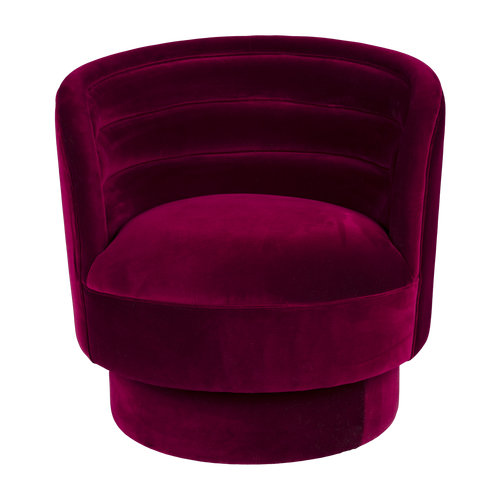
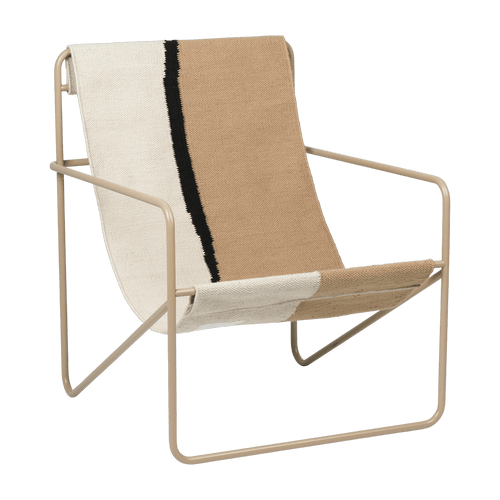
View the Armchairs collection →

The criteria that matter

The criteria that matter
CriterionWhat it changesKey figureThe pitfall
Seat height Ease of getting up 38 to 42 cm lounge; 43 to 45 cm to get up effortlessly A 38 cm lounge for someone with a stiff back
Seat depth Back contact with the backrest 45 to 55 cm A 60 cm seat without lumbar cushion
Backrest height Head support 100 cm and above for reading or dozing A low backrest for a reading armchair
Armrests Arm rest and support for getting up 18 to 25 cm above the seat Armrests too low that make the shoulders drop
Footprint Movement around the room Footprint plus 60 cm; 40 to 50 cm more with a footstool A 90 cm lounge in a 70 cm passageway
Upholstery Maintenance and durability Leather nourished once or twice a year; bouclé to be brushed Bouclé in a home with a cat

Model comparison

Prices shown are the catalogue prices at the time you read this page.

Mistakes to avoid

  • Choosing a reading armchair with a low backrest: without head support, the neck tires in less than an hour.
  • Choosing a lounge chair with a 38 cm seat height for someone with a stiff back: 43 to 45 cm make it easier to stand up without effort.
  • Forgetting the footstool when calculating space: it adds 40 to 50 cm in front of the armchair.
  • Placing the reading lamp in front or on the side of the hand that turns the pages: the shadow falls on the page.
  • Putting a swivel armchair or rocking chair against the wall: they need 20 to 40 cm of clearance to turn or rock.
  • Buying an armchair advertised as a recliner without checking whether the backrest tilts: the term covers both fixed and reclining armchairs.

Frequently asked questions

What is the best armchair for reading?
An armchair with a high back or headrest, 100 cm tall or more, with a seat 40 to 45 cm high and 45 to 55 cm deep, armrests to rest your elbows on and a footstool. Add a reading floor lamp positioned behind the shoulder, on the opposite side to the hand turning the pages.
What is the most comfortable armchair?
The one whose dimensions match your body and how you use it: a seat height that keeps your feet flat on the floor, a depth that keeps your back against the backrest, a backrest high enough for your head if you doze off in it. Try it for at least ten minutes, in the position you'll use it at home.
What is the best reclining armchair?
The term covers two types: reclining armchairs, whose backrest tilts back and leg rest lifts up, and fixed enveloping armchairs paired with a footstool. When choosing, check whether the backrest reclines, the backrest height for the neck, and the space needed in front of the armchair once the legs are extended.
What is the best armchair for back pain?
No armchair cures back pain, and persistent pain requires a healthcare professional. Helpful criteria: a firm seat 43 to 45 cm high and 45 to 50 cm deep, full armrests for getting up, a high backrest that supports the lower back and neck.
What is the best armchair for watching TV?
A swivel armchair or a high-back armchair with footstool, positioned slightly at an angle so your gaze falls on the centre of the screen. The backrest must support the neck to avoid sliding forward during a film. Keep a side table within reach and 20 to 30 cm free behind a swivel.
What are the standard dimensions of an armchair?
There is no standard, but families: 60 to 70 cm wide for a compact armchair, 70 to 90 cm for a lounge, over 90 cm for a large armchair. Seat height ranges from 38 to 45 cm, seat depth from 45 to 55 cm, total height from 70 cm to over 100 cm.
What seat height for an armchair?
Between 38 and 45 cm depending on use. Around 38 to 42 cm, the armchair is a lounge where you sink in with legs extended. Around 43 to 45 cm, you sit more upright and get up effortlessly, which suits elderly people or those with sensitive backs better.
How do you put a throw on an armchair?
Fold it in three lengthways and let it fall over one armrest, or fold it in two across the backrest with one end falling onto the seat. To protect a light-coloured fabric, unfold it over the seat and tuck the edges between cushion and backrest. On leather, tie two corners behind the backrest.