



Skip to content

-5% de remise supplémentaire sur tout notre OUTLET avec le code EXTRA5

Dès 150€ d’achats chez Serax, une carafe Fish&Fish est offerte. Ajoutez-la à votre panier !

BLACK MONTH Xmas Shop
Living room lit by the Arco floor lamp by Flos above a sofa

Buying guide

How many lumens per m²? Lighting room by room, from bulb to floor lamp

The quantity of light is measured in lumens, its colour in kelvins and its quality by the colour rendering index. This guide provides reference points for each room, explains how to read a bulb, what height of floor lamp to choose and which desk lamp protects your eyes, with 12 lighting pieces from the catalogue compared.

12 lighting fixtures compared6 rooms coveredupdated September 2026

Tense pendant lights by New Works above a living room

Find your lighting in 30 seconds

1 / 4

Which room do you want to light?

Each room has its own lumen and colour temperature guidelines.

What type of light fitting?

General lighting comes from the ceiling, the rest comes from lamps.

What light colour temperature?

2,700 K is the warm white for the living room and bedroom; 3,000 K and above suit the kitchen, bathroom and study.

What budget do you have in mind?

Price of the lighting, bulb excluded when not supplied.

Passer et lire le guide

Our recommendation

Deux alternatives sérieuses

Key takeaways

Allow 150 to 300 lumens per m² in a living room, 100 to 200 in a bedroom, 300 to 500 in a kitchen and bathroom, 400 to 500 on a desk: these are the benchmarks used by lighting professionals, to be multiplied by the room area. Standard NF EN 12464-1 specifies 500 lux on a work surface or reading area. An 806-lumen bulb replaces a 60 W incandescent.

  • Lumens required = room surface area in m² × target lumens per m²; add 20 to 30% if the walls are dark.
  • Living room 150–300 lm/m², bedroom 100–200, kitchen and bathroom 300–500, study 400–500 (usage benchmarks).
  • 2,700 K for rest rooms, 3,000 K for living spaces, 4,000 K for the kitchen and workshop; CRI of 80 minimum, 90 to judge colours.
  • A reading floor lamp measures 120 to 150 cm; a desk lamp provides 400 to 500 lux on the work surface with an articulated arm.
  • In the bathroom and outdoors, check the IP rating: IP44 minimum near water, IP65 to IP67 when exposed to the elements.

How many lumens per m²: room-by-room guidelines

The lumen measures the light emitted by a source, the lux the light received by a surface: one lux equals one lumen per square metre. Recommendations by room are expressed in lux, or in lumens per m², to be multiplied by the area. Only one standard applies, to workplaces: NF EN 12464-1, which sets 500 lux for reading, writing and screen work. For homes, the following values are benchmarks used by lighting professionals.

How many lumens per m²: the calculation rule

Lumens required = room area in m² × target lumens per m². A 20 m² living room at 200 lm/m² requires 4,000 lumens distributed across several sources; a 12 m² bedroom at 150 lm/m² needs only 1,800 lumens. An opaque lampshade, dark walls or a ceiling above 2.70 m absorb part of the flux: add 20 to 30% in that case. Localised lighting, reading lamp or worktop spotlight, only needs the flux for its zone.

How many lumens for a living room

Between 150 and 300 lumens per m², i.e. 3,000 to 6,000 lumens for 20 m², distributed in three layers: soft general lighting (pendant light or ceiling light, 1,500 to 2,500 lm), functional lighting near the sofa (reading floor lamp of 800 to 1,200 lm, such as the Arco LED by Flos, 1,224 lm at 2,700 K according to its data sheet) and ambient lighting (table lamps of 200 to 500 lm). A dimmer does the rest.

How many lumens for a bedroom

Between 100 and 200 lumens per m², i.e. 1,200 to 2,400 lumens for 12 m², in 2,700 K. The bedroom doesn't need powerful general lighting: two bedside lamps of 200 to 400 lm, an adjustable reading wall light and, if needed, a dimmable pendant light. The Vuelta by Ferm Living and its 265 lumens at 2,700 K with dimmer, according to the manufacturer's data sheet, fulfils exactly this role.

How many lumens for a kitchen

Between 300 and 500 lumens per m² for general lighting, and 500 lux on the worktop, a value which NF EN 12464-1 sets for professional kitchens and which is applied at home. In practical terms, a 10 m² kitchen requires 3,000 to 5,000 lumens, part of which above the worktop in the form of spotlights or strip lights in 3,000 to 4,000 K. An adjustable ceiling light such as the Onda by Maytoni, 767 lm at 3,916 K with a CRI of 84 according to its data sheet, precisely lights a worktop or an island.

How many lumens for bathroom mirror

The bathroom requires 300 to 500 lumens per m² overall and, at the mirror, light that comes from the front or both sides, not from the ceiling: two wall lights of 200 to 400 lm each placed at eye level, around 160 cm, or a mirror with integrated lighting. Choose 3,000 K and a CRI of 90 if you apply make-up in front of it. The Moy by Faro Barcelona, 220 lm at 3,000 K in IP44 wall light is installed in pairs on either side of the mirror.

How many lumens for outdoor lighting

Outdoors, we think by zone: 100 to 300 lumens to mark out a path, 300 to 800 lumens for a dining terrace, 1,000 lumens and more for a façade. The colour remains warm, 2,700 K. A garage or workshop is treated like a worktop: 300 to 500 lux in 4,000 K. All types of lighting are brought together in the lighting.

How many lumens per m²: room-by-room guidelines
Room or areaBenchmark (lumens per m²)For 10 m²Recommended temperatureSource
Living room, lounge 150 à 300 1,500 to 3,000 lm from several sources 2 700 à 3 000 K Usage benchmark
Bedroom 100 à 200 1,000 to 2,000 lm 2 700 K Usage benchmark
Kitchen (general) 300 à 500 3,000 to 5,000 lm 3 000 à 4 000 K Usage benchmark
Worktop, reading, writing 500 lux on the surface Localised lighting of 400 to 500 lm per workstation 3,000 to 4,000 K, CRI 80 minimum EN 12464-1
Bathroom 300 à 500 3,000 to 5,000 lm, including 400 to 800 lm at the mirror 3 000 K Usage benchmark
Home office 400 à 500 4,000 to 5,000 lm, including 400 to 500 lm from desk lamp 3 000 à 4 000 K Usage benchmark, EN 12464-1 for the surface
Entrance hall, hallway 100 à 200 1,000 to 2,000 lm 2 700 à 3 000 K Usage benchmark
Terrace (per area) 300 to 800 lm per area Not applicable 2 700 K Usage benchmark
Garage, workshop 300 à 500 3,000 to 5,000 lm 4 000 K Usage benchmark

The lumens per m² calculation gives an order of magnitude, not an obligation. A living room with three 400-lumen lamps at 2,700 K feels more welcoming than a single 3,000-lumen ceiling light, despite a lower total.

Martinelli Luce Pipistrello lamp switched on on a black sideboard, next to a round dining table, at the end of the day
Martinelli Luce Pipistrello Med: 850 lumens at 2,700 K, dimmer on the cable. The ambient light that complements the general lighting.

View the Lighting collection →

How to choose a light bulb: lumens, kelvins, CRI and cap

Four pieces of information are enough to choose a light bulb: the luminous flux in lumens, the colour temperature in kelvins, the colour rendering index (CRI or Ra) and the cap. Since LEDs, the power in watts only indicates consumption.

100-watt bulb how many lumens: the equivalence table

European Regulation (EC) No 244/2009 set the equivalences to be displayed between an incandescent bulb and its replacement: 25 W for 249 lumens, 40 W for 470 lumens, 60 W for 806 lumens, 75 W for 1,055 lumens, 100 W for 1,521 lumens. An LED produces these fluxes with 3 to 13 W: the 12 W E27 LED bulb by Flos delivers 1,180 lumens at 2,700 K, the equivalent of a former 75 W, according to its data sheet. The maximum power marked on the socket concerns the heat output: an LED stays well below.

How to choose an LED bulb: 2,700 K, 3,000 K or 4,000 K

The colour temperature describes the shade of white light. 2,700 K is warm white, that of incandescence, for the living room, bedroom and dining room. 3,000 K remains warm but clearer: hallway, bathroom, kitchen where comfort is wanted. 4,000 K is a neutral white, for the worktop, study and workshop; beyond 5,000 K, you enter daylight, rarely pleasant at home. Some LEDs go down to 2,200 K, an amber light close to candlelight, like the wall light Kilter by Tala. Filament LEDs reproduce the appearance of old low-flux bulbs: the Spiral bulb by Normann Copenhagen, E14, 1.5 W, dimmable, is made for lighting where the bulb is visible.

The colour rendering index

The CRI ranges from 0 to 100 and measures colour fidelity compared to daylight. Standard NF EN 12464-1 requires a Ra of at least 80 in most workspaces; this is the threshold to apply at home. For the kitchen, dressing room or mirror, aim for 90. Serious data sheets indicate it: CRI 84 for the Onda ceiling light by Maytoni, above 80 for the Pipistrello by Martinelli Luce and the Carrie lamp by Audo.

E27, E14, GU10, G9 and G4 caps

The cap is designated by a letter and a number (IEC 60061 standard). E27 and E14 are screw caps of 27 and 14 mm: the first equips pendant lights and floor lamps, the second small lamps and wall lights. GU10, with pins 10 mm apart, to push in then turn, equips spotlights. G9 and G4, with thin pins 9 and 4 mm apart, equip compact wall lights; the G4 often works on low voltage. Designer bulbs and LEDs for editor lighting are in the bulbs.

How to choose a light bulb: lumens, kelvins, CRI and cap
Incandescent bulb replacedLuminous flux to displayTypical LED powerSource
25 W 249 lm 2 à 3 W Regulation (EC) No 244/2009
40 W 470 lm 4 à 5 W Regulation (EC) No 244/2009
60 W 806 lm 7 à 9 W Regulation (EC) No 244/2009
75 W 1,055 lm 10 to 12 W (Flos 12 W: 1,180 lm) Regulation (EC) No 244/2009, Flos datasheet
100 W 1,521 lm 13 à 15 W Regulation (EC) No 244/2009

A dimmable LED only works with an LED-compatible dimmer, and a fitting with integrated LED does not allow changing the light source: its lifespan, 25,000 to 35,000 hours according to manufacturers' specifications, is that of the fitting.

View the Light Bulbs collection →

Floor lamp height and floor lamp size: which one for the living room

The height of a floor lamp is chosen according to its function. For reading, the light source should be just above the shoulder of a seated person, meaning a lampshade whose lower edge sits around 110 to 130 cm from the floor: a reading floor lamp measures 120 to 150 cm, such as the Leaf by Muuto, 118 cm, or the Apex by HAY, 110 cm, with an adjustable lampshade. To illuminate a room or corner, the light source rises to 150 to 190 cm and diffuses upwards or through a lampshade: this is the height of the Singapour by Market Set, 157 cm, or the Bow by Zuiver, 190 cm. The arc floor lamp, finally, replaces a pendant light above a coffee table or dining table: the Arco by Flos rises to 240 cm and extends its light source by 220 cm, according to its specification sheet. These heights are practical benchmarks; the dimensions come from manufacturers' specification sheets.

Which floor lamp for a living room therefore depends on the sofa: next to a reading armchair, a 110 to 150 cm model with adjustable lampshade; behind a sofa, a 150 to 190 cm model with diffused light; above a coffee table, an arc lamp. Allow for 800 to 1,200 lumens for reading, 300 to 600 for ambience, and a dimmable LED such as on the Leaf. Check the cable length, 150 to 240 cm depending on the model, in relation to the socket. All formats are in the floor lamps.

Floor lamp height and floor lamp size: which one for the living room
FunctionReference heightRecommended luminous fluxCatalogue examples (manufacturer's specification height)
Reading floor lamp, next to an armchair 110 to 150 cm, adjustable lampshade 800 to 1,200 lm, 2,700 K HAY Apex 110 cm, Muuto Leaf 118 cm, Marset Funiculí 135 cm
Ambient floor lamp, behind a sofa or in a corner 150 to 190 cm, diffused light 300 to 800 lm, 2,700 K Hübsch Ido 154 cm, Zuiver Fan 155 cm, Market Set Singapour 157 cm, Zuiver Bow 190 cm
Arc floor lamp above a table 200 to 240 cm, reach of 150 to 220 cm 1,000 to 1,500 lm Flos Arco LED 240 cm, reach 220 cm, 1,224 lm
Outdoor floor lamp 180 to 240 cm, IP44 minimum 500 to 1,500 lm Fatboy Archigrande 233 cm, IP55
Flos Arco floor lamp with marble base, its arc over a wooden dining table in a room with grey walls
Flos Arco: 240 cm high with a light source extending 220 cm. The arc floor lamp replaces a pendant light above a table.

View the Floor lamps collection →

Best desk lamp: articulated arm, 400 to 500 lux and good positioning

A good desk lamp provides 400 to 500 lux over the work area, the value that NF EN 12464-1 specifies for reading and writing, without glare and without casting shadows on the page. Three criteria matter: an articulated arm that positions the source 35 to 45 cm from the surface, a swivel head that directs the beam towards the task and not towards the eyes, and an output of 400 to 800 lumens at 2,700 to 4,000 K.

Which bulb for a desk lamp? An LED of 400 to 500 lumens is sufficient when the head is 40 cm from the surface: the Type 75 Paul Smith Edition 3 by Anglepoise features an LED of 470 lumens at 2,700 K, the Apex by HAY states 500 to 800 lumens at 2,700 to 3,000 K, according to their specifications. A CRI of 80 at least, 90 for drawing or photo retouching. A dimmable lamp, such as the PC by HAY with clamp or the Leaf by Muuto, adapts to screen work, which requires less light than paper.

How to position your desk lamp: on the left for a right-hander, on the right for a left-hander, so that the hand does not shadow the writing; the head 35 to 45 cm from the surface and slightly forward; never facing the screen, as it would create a reflection. The arm matters as much as the output: the Tolomeo by Artemide extends up to 102 cm and rises to 108 cm, which covers a 160 cm desk without moving it. Models with clamps and arms are brought together in the desk lamps.

Anglepoise Type 75 Paul Smith Edition 3 lamp with multicoloured arm, leaning over a desk with an open book, bookshelf beside it
Anglepoise Type 75 Paul Smith Edition 3: 470-lumen LED at 2,700 K. The head tilts towards the page, not towards the eyes.

View the Desk Lamps collection →

Pendant light or ceiling light: general lighting room by room

General lighting comes from the ceiling and should account for only half the light output in a living space; the rest comes from lamps. A pendant light brings the source down above a table or island, its bottom 70 to 90 cm from the worktop, a practical guideline detailed in our pendant light guide. A ceiling light stays flush and suits low ceilings and circulation spaces.

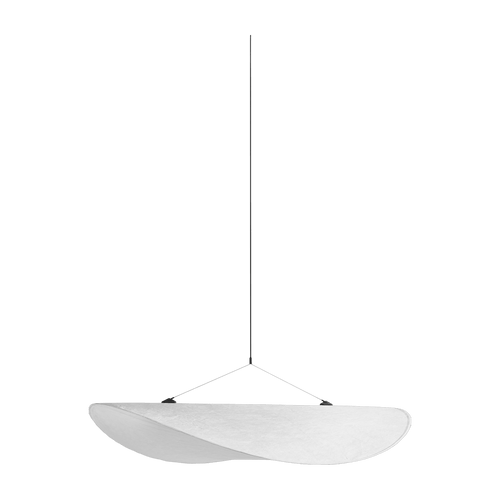
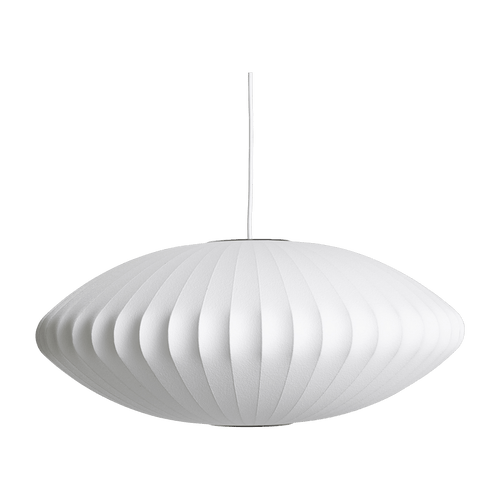
Which ceiling light for a kitchen: an LED model of 700 to 1,500 lumens, 3,000 to 4,000 K, with a CRI of 80 and above, adjustable if possible to aim at the worktop, like the Onda by Maytoni, whose head swivels 355 degrees horizontally and 90 degrees vertically. For a dining room, a dimmable pendant light of 1,500 to 2,500 lumens at 2,700 to 3,000 K, such as the Tense by New Works, 90 cm, LED 2,000 lm at 3,000 K, according to the specification, or the Nelson Saucer Bubble by HAY, 63 cm, which diffuses soft light through its lampshade.

How to light a room without a ceiling light: this is the case in many period living rooms and most bedrooms. General lighting is replaced by two or three perimeter sources: a 150 to 190 cm ambient floor lamp with diffused light, a wall light to plug into a socket, a table lamp on a piece of furniture. The total in lumens remains that of the calculation per m², distributed differently. Flush models are in the ceiling lights collection, cable models in the pendant lights.

Two HAY Nelson Saucer Bubble pendant lights above a long wooden table and chrome-legged chairs
HAY Nelson Saucer Bubble: the lampshade diffuses soft light above the dining table.

View the Pendant Lights collection →

Bathroom and outdoor use: understanding the IP rating

The IP rating (IEC 60529 standard) is read as two digits: the first, from 0 to 6, indicates protection against solids and dust; the second, from 0 to 9, against water. IP20 designates an indoor lighting fixture; IP44 resists splashes; IP54 and IP65 resist jets; IP67 resists temporary immersion. An X replaces an untested digit, hence IPX4 or IPX7.

In the bathroom, standard NF C 15-100 divides the room into zones around the bathtub and shower. In zone 0, the interior of the bathtub or shower tray, only IPX7 lighting fixtures in extra-low voltage are permitted. In zone 1, above the bathtub or shower up to 2.25 m, IPX4 minimum is required (IPX5 if jets are present) and safety extra-low voltage. In zone 2, the 60 cm band around, IPX4 minimum. Beyond that, IP20 lighting is permitted, but IP44 remains advisable near a washbasin. Mirror wall lights should therefore be chosen in IP44, such as the Cime by ENOstudio or the Cast Sconce by Audo, IP44 and dimmable, according to their specifications. If in doubt about the zones, have the installation validated by an electrician.

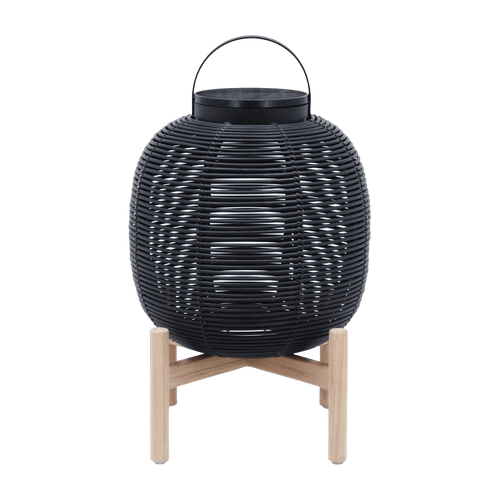
Outdoors, the logic is the same. Under an awning or covered pergola, IP44 is sufficient; exposed to rain, IP54 to IP65; placed on the ground or liable to be hosed, IP65 to IP67. The Archigrande floor lamp by Fatboy is rated IP55 and UV-resistant; the Tika solar lantern by Vincent Sheppard is IP67, with 500 lumens at 2,700 K; the Carrie lamp by Audo, cordless and IP44, moves from table to terrace with 384 lumens at 2,700 K and a CRI of 80. These values come from the manufacturers' specifications. IP44 wall lights for mirrors are in the bathroom wall lights collection, terrace models in the garden lighting.

Bathroom and outdoor use: understanding the IP rating
LocationMinimum IP ratingCatalogue examples (manufacturer data sheet)Source
Zone 0 (inside bath or shower) IPX7, very low voltage None NF C 15-100
Zone 1 (above, up to 2.25 m) IPX4 (IPX5 with jets), SELV None NF C 15-100
Zone 2 (60 cm around) IPX4 Faro Moy, ENOstudio Cime, Audo Cast Sconce (IP44) NF C 15-100
Outside zones (mirror, washbasin) IP20 permitted, IP44 recommended Faro Moy, ENOstudio Cime, Normann Illu (IP20) NF C 15-100, practical guideline
Covered terrace IP44 Audo Carrie, Market Set Singapour (IP44) IEC 60529, practical guideline
Garden exposed to rain IP54 to IP65 Fatboy Archigrande (IP55) IEC 60529, practical guideline
Placed on ground, watering IP65 to IP67 Vincent Sheppard Tika (IP67) IEC 60529, practical guideline
Vincent Sheppard Tika lanterns lit at night, placed on grass and on a wooden deck
Vincent Sheppard Tika: IP67 solar lantern, 500 lumens at 2,700 K. Placed on the ground where watering reaches it, that's the expected rating.

View the Garden Lighting collection →

Practical Examples

A 25 m² living room with reading nook

Target 200 lm/m², i.e. 5,000 lumens. A dimmable pendant light of 2,000 lumens above the table (Tense by New Works), a reading floor lamp of 1,200 lumens next to the armchair (Arco LED by Flos or Leaf by Muuto), two table lamps of 500 lumens on furniture, in 2,700 K. In the evening, the pendant light dims to 30% and the lamps take over.

A study in a 12 m² bedroom

The bedroom keeps its 150 lm/m², i.e. 1,800 lumens in 2,700 K; the study adds an articulated arm lamp directed at the work surface, such as the Type 75 Mini by Anglepoise, on the left for a right-hander: 500 lux on the work area without changing the room's ambience.

A 6 m² bathroom with double basin

Target 400 lm/m², i.e. 2,400 lumens: an IP44 ceiling light of 1,200 to 1,500 lumens in 3,000 K for general lighting, and two IP44 wall lights of 220 to 400 lumens on either side of the mirror, at 160 cm from the floor, such as two Moy by Faro Barcelona. A CRI of 90 at the mirror for make-up. The wall lights are in the wall lights.

Muuto Leaf floor lamp next to a black armchair, grey and burgundy sofas in the background
Muuto Leaf next to an armchair: the reading floor lamp for the living room corner, with its dimmable LED.

View the Wall lights collection →

Maintenance and lifespan

An LED doesn't burn out, it decreases in output: the product sheets state 25,000 hours for the Carrie lamp by Audo, 30,000 for the Vuelta by Ferm Living, 35,000 for the Leaf lamp by Muuto, equivalent to ten to fifteen years at three hours per day. On a lighting fixture with integrated LED, this duration is that of the fixture itself; with a base, you replace the bulb.

Dust absorbs part of the light: dust lampshades and diffusers twice a year, with the lighting switched off, using a soft, dry cloth, as recommended by Muuto and Fatboy; never use abrasive products on an opal glass or polycarbonate diffuser. Outdoor lighting should be rinsed with clean water in spring. Two habits extend an installation's life: use a dimmer only with dimmable LEDs, and respect the maximum wattage marked on the socket. All the lighting in the catalogue is brought together in the lighting.

Audo Carrie cordless lamp placed on a dark marble shelf, next to a magazine and a candle holder
Audo Carrie: an LED rated for 25,000 hours. For maintenance, use a soft, dry cloth with the lamp switched off.

View the Lighting collection →

2026 trends: what our customers are choosing

What The Cool Republic's orders show between January and September 2026 in the Lighting collection. Shares are counted by number of orders, not quantities, so that a large purchase doesn't weigh more than another.

What's most ordered in 2026

  • Colours: white (32%), black (11%), beige (10%).
  • Materials: paper - cardboard (15%), steel (11%), plastic - innovative materials (9%).
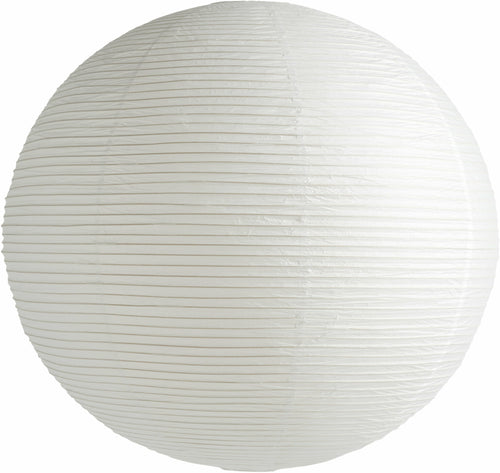
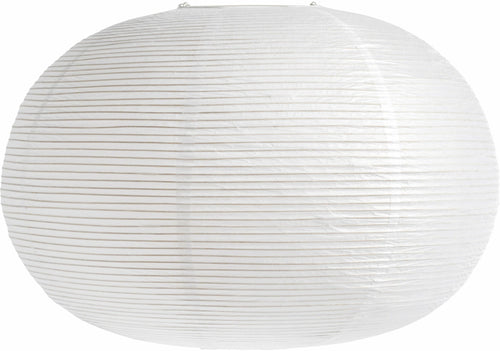
  • Types: pendant lights (24%), lamps (17%), lampshades (17%), wall lights (16%).

Most ordered models since January

Method: orders placed on thecoolrepublic.com from 1 January to 30 September 2026, counted by number of orders containing the product; only models still on sale are listed. Updated quarterly.
View the Lighting collection →

The criteria that matter

The criteria that matter
CriterionWhat it changesBenchmark figureThe pitfall
Luminous flux in lumens The quantity of light Living room 150-300 lm/m², bedroom 100-200, kitchen 300-500, study 400-500 (usage benchmarks) Thinking in watts: an 8 W LED equals a 60 W incandescent
Distribution of sources Comfort and modulation Three layers: general, task, ambient; general lighting should not exceed half the total A single 3,000 lm ceiling light and nothing else
Colour temperature The atmosphere 2,700 K for rest, 3,000 K for living areas, 4,000 K for worktops 6,500 K in a bedroom
CRI Colour fidelity 80 minimum (NF EN 12464-1), 90 in kitchens and at mirrors A cheap LED with no stated CRI
Cap Compatibility E27 pendant lights and floor lamps, E14 small lamps, GU10 spotlights, G9 and G4 compact wall lights Buying an E27 for an E14 socket
Floor lamp height Reading or ambient 110-150 cm for reading, 150-190 cm for diffused light, 200-240 cm for an arc A 190 cm floor lamp with diffused light as a reading lamp
Desk lamp Visual comfort 400 to 500 lux on the work surface (NF EN 12464-1), head 35-45 cm away, on the left for right-handers The lamp facing the screen, reflecting in it
IP rating Safety near water IP44 near a washbasin or under shelter, IPX4 in zones 1 and 2 (NF C 15-100), IP65-IP67 exposed An IP20 wall light above a bathtub

Model comparison

ModelPriceTypeLuminous fluxTemperatureLight sourceIP and room
Designer floor lamp Arco Led €2.160,00n/an/an/an/an/a
Black floor lamp Leaf €299,25n/an/an/an/an/a
Floor lamp in black steel 22x110cm Apex €228,65n/an/an/an/an/a
Onda black metal LED ceiling light 767 Lm €38,40n/an/an/an/an/a
White pendant light 90cm Tense €443,93n/an/an/an/an/a
Aluminium desk lamp 32 x 53 cm Type 75 Paul Smith Edition 3 €269,25n/an/an/an/an/a
Tolomeo aluminium table lamp €300,00n/an/an/an/an/a
White glass table lamp 21.4 x 21.6 cm Vuelta €140,60n/an/an/an/an/a
Dimmable white stainless steel lamp 40 x 62 cm Pipistrello Med €1.512,00n/an/an/an/an/a
Moy LED wall light in bronze metal €119,76n/an/an/an/an/a
Tika black outdoor lantern with teak legs H59 cm €630,00n/an/an/an/an/a
Portable glass and brass table lamp 13.5x24.5cm Carrie €180,00n/an/an/an/an/a

Prices shown are the catalogue prices at the time you read this page.

Which brand to choose

Flos

The Italian icon of lighting design

See the Flos brand →
Artemide

Design house creating innovative lighting, made in Italy

See the Artemide brand →
Anglepoise

Iconic and timeless British design lighting

See the Anglepoise brand →
HAY

Contemporary Danish design for everyday life

See the HAY brand →
Muuto

A new perspective on Scandinavian design

See the Muuto brand →

Mistakes to avoid

  • Choosing a bulb by its wattage: an 8 W LED produces the 806 lumens of an old 60 W bulb.
  • A single 3,000-lumen ceiling light in a 20 m² living room: the total is right, the atmosphere is flat; you need three layers.
  • 4,000 K or 6,500 K in a bedroom: neutral white delays sleep onset, stick to 2,700 K.
  • A desk lamp placed on the right for a right-hander, or facing the screen: shadow on the page and glare on the screen.
  • An IP20 wall light in zone 2 of the bathroom, less than 60 cm from the shower: NF C 15-100 standard requires IPX4.
  • An old wall dimmer on a non-dimmable LED: flickering and reduced lifespan.
  • A 190 cm floor lamp with diffused light as a reading lamp: the source is too high, you need 110 to 150 cm.

Frequently asked questions

How many lumens for a bedroom?
Allow 100 to 200 lumens per m², or 1,200 to 2,400 lumens for a 12 m² bedroom, in warm white 2,700 K. Distribute them between two bedside table lamps of 200 to 400 lumens, a reading wall light and, if needed, a dimmable pendant light. These are practical benchmarks; a bedroom requires less light than a living space.
How many lumens for a living room?
Between 150 and 300 lumens per m² depending on use, or 3,000 to 6,000 lumens for a 20 m² living room. Distribute them in three layers: general ceiling lighting, a reading floor lamp of 800 to 1,200 lumens near the sofa, ambient table lamps of 200 to 500 lumens. With dark walls or a high ceiling, add 20 to 30%.
How many lumens per m² for a kitchen?
Between 300 and 500 lumens per m² for general lighting, and 500 lux on the worktop, the value specified by standard NF EN 12464-1 for professional kitchens. A 10 m² kitchen therefore requires 3,000 to 5,000 lumens, part of which in spotlights or strip lights above the worktop, in 3,000 to 4,000 K with a CRI of 80 and above.
How many lumens per m² for a bathroom?
Between 300 and 500 lumens per m², or 1,800 to 3,000 lumens for 6 m², with light at the mirror coming from the front or both sides: two wall lights of 200 to 400 lumens at eye level. Choose 3,000 K, a CRI of 90 for make-up application, and IP44 near the washbasin, IPX4 at minimum in volumes 1 and 2 of standard NF C 15-100.
How many lumens per m² outdoors?
Outdoors, one thinks by zone rather than per m²: 100 to 300 lumens to mark out a path, 300 to 800 lumens for a dining terrace, 1,000 lumens and above for a façade or garage entrance. Stay at 2,700 K so as not to overwhelm the garden, and check the IP rating: IP44 under shelter, IP54 to IP65 exposed to rain, IP67 placed on the ground.
How many lumens per m² for a garage?
A garage or workshop is treated as a workplace: 300 to 500 lumens per m², or 6,000 to 10,000 lumens for 20 m², in neutral white 4,000 K with a CRI of 80 at minimum, as required by standard NF EN 12464-1 for routine tasks. Favour distributed LED strip lights rather than a central point, to avoid shadows cast on the workbench.
What IP rating for bathroom lighting?
Standard NF C 15-100 requires IPX7 in volume 0 (bath, shower tray), IPX4 at minimum in volume 1 (above, up to 2.25 m) with safety extra-low voltage, and IPX4 in volume 2 (60 cm around). Outside volumes, IP20 is permitted, but IP44 remains prudent near a washbasin. If in doubt, have the installation validated by an electrician.
100-watt bulb: how many lumens?
A 100 W incandescent bulb corresponds to 1,521 lumens, according to the equivalence table in European regulation (EC) No 244/2009; 75 W to 1,055 lumens, 60 W to 806 lumens, 40 W to 470 lumens. An LED achieves these outputs with 13 to 15 W for 1,500 lumens and 7 to 9 W for 800 lumens. Therefore read the lumens on the packaging, not the watts.