



Skip to content

-5% de remise supplémentaire sur tout notre OUTLET avec le code EXTRA5

Dès 150€ d’achats chez Serax, une carafe Fish&Fish est offerte. Ajoutez-la à votre panier !

BLACK MONTH Xmas Shop
The Poster Club framed prints leaning against the wall of a Haussmann-style living room

Buying guide

What size frame for what poster or photo, and at what height should you hang it?

Choosing a frame means matching three dimensions: that of the paper, that of the mount window and that of the wall. This guide provides standard sizes in centimetres, the hanging rule and the method for composing a wall of frames, with 9 frames and posters from the catalogue compared.

9 frames and prints compared14 formats detailedupdated September 2026

Framed The Poster Club prints propped on the floor of a Haussmannian living room

Find your frame or poster in 30 seconds

1 / 4

What is your project?

This determines the format: you can frame at the exact paper size, or one size up with a mount.

What are you looking for?

A frame alone, a poster alone, or a poster delivered in its frame.

What image size?

A 50 x 70 doesn't fit any A-size frame: stay within the same format family.

What budget per piece?

Format, frame material and print quality account for most of the price difference.

Passer et lire le guide

Our recommendation

Deux alternatives sérieuses

Key takeaways

A frame is chosen to match the exact paper size, or one size up with a mount: an A3 poster (29.7 × 42 cm) fits in an A3 frame, or in a 40 × 50 cm frame with a mount. A sizes follow the ISO 216 standard; 30 × 40, 50 × 70 and 70 × 100 cm are standard poster sizes. The centre of the image should be hung between 145 and 160 cm from the floor.

  • A (ISO 216) formats: A5 14.8 x 21, A4 21 x 29.7, A3 29.7 x 42, A2 42 x 59.4, A1 59.4 x 84.1 cm.
  • Standard poster formats: 30 x 40, 40 x 50, 50 x 70, 70 x 100 cm; photo formats: 10 x 15, 13 x 18, 20 x 30 cm.
  • With a mount, choose a frame one size up and allow a 5 to 8 cm margin around the image.
  • Centre of the image 145-160 cm from the floor; above a sofa or bed, the composition covers two thirds of the furniture's width.
  • Gallery wall: 5 to 8 cm between frames, lay out the composition on the floor before drilling.

Sizes to know: frames, posters and photos in centimetres

Three format families coexist on the market and do not overlap exactly: the A formats of ISO 216, commercial poster formats (30 x 40, 50 x 70, 70 x 100 cm) and photo formats inherited from film photography (10 x 15, 13 x 18, 20 x 30 cm). A frame is chosen first in the family of the paper you want to frame.

Photo frame size and frame size: the three format families

A formats have a unique property: each format is half the previous one, and the width-to-height ratio remains the same (1 to the square root of 2). An A2 poster is therefore exactly two A3s, and an A3 frame accommodates an A4 with a regular margin. Poster formats 30 x 40, 40 x 50, 50 x 70 and 70 x 100 cm follow another ratio, close to 3 to 4 or 5 to 7: a 50 x 70 poster does not fit in any A frame. Photo formats 10 x 15, 13 x 18 and 20 x 30 cm maintain the 2 to 3 ratio of 24 x 36 film. Remember the rule: frame at the exact format, or one size up with a mount, never in a neighbouring family without a mount.

A3 poster dimensions, A2 and A1: the A series in centimetres

An A3 poster measures 29.7 x 42 cm, an A2 42 x 59.4 cm, an A1 59.4 x 84.1 cm, an A0 84.1 x 118.9 cm (ISO 216 standard). The corresponding frame is slightly larger than the paper: the Moebe Frame in A3 measures 31.7 x 44 cm overall, the one in A2 44 x 61.5 cm, according to the manufacturer's specifications, i.e. 2 cm more than the paper in each direction. Many posters sold in A3 include a white border within the format, such as those from Le Renard (29.7 x 42 cm, border included): they are framed edge to edge, without a mount.

Poster size 30 x 40, 50 x 70 and 70 x 100: poster publishers' formats

Scandinavian publishers and poster studios print in 30 x 40, 50 x 70 and 70 x 100 cm, sometimes 40 x 50 and 21 x 30 cm. These formats correspond to commercial frames sold under the same names: a 50 x 70 poster from The Poster Club goes into a 50 x 70 frame edge to edge, such as the Studio 50 x 70 frame from Hübsch, or into a 70 x 100 with a 10 cm mount. The 70 x 100 cm is the largest common format without resorting to bespoke framing; beyond that, the poster is often placed on strips or stretched on a frame.

A4 frame dimension and A3 frame dimension: bare frame or with mount

An A4 frame generally measures 23 x 31.7 cm overall (Moebe Frame A4), for a paper of 21 x 29.7 cm. Without a mount, the image almost touches the edges: this is the graphic rendering of full-bleed posters. With a mount, go up one format: an A4 is placed in an A3 or 30 x 40 cm frame, an A3 in an A2 or 40 x 50 cm frame, and the mount window leaves 4 to 6 cm of margin around the image. The mount covers 3 to 5 mm on each edge of the paper to hold it: check that the subject does not touch the edges of the print.

Standard frame size for a 10 x 15, 13 x 18 or 20 x 30 photo

A 10 x 15 cm photo is framed edge to edge in a 10 x 15 frame or, more elegantly, in a 15 x 20 or 18 x 24 cm with a mount. A 13 x 18 cm photo goes into a 20 x 30 cm frame with a mount, or into a bare 13 x 18. A 20 x 30 cm photo is almost an A4 (21 x 29.7): it fits into an A4 frame with 5 mm clearance, or into a 30 x 40 cm with a mount. For smaller prints or cards, a clip photo holder such as the Moebe Clip eliminates the need for a frame. All frame formats are brought together in the frames.

Sizes to know: frames, posters and photos in centimetres
FormatPaper dimensionsEdge-to-edge frameFrame with mountSource
A5 14.8 x 21 cm A5 (Moebe Frame A5: 16.8 x 23 cm overall) A4 or 20 x 30 cm ISO 216, Moebe specification
A4 21 x 29.7 cm A4 (Moebe Frame A4: 23 x 31.7 cm overall) A3 or 30 x 40 cm ISO 216, Moebe specification
A3 29.7 x 42 cm A3 (Moebe Frame A3: 31.7 x 44 cm overall) A2 or 40 x 50 cm ISO 216, Moebe specification
A2 42 x 59.4 cm A2 (Moebe Frame A2: 44 x 61.5 cm overall) A1 or 50 x 70 cm ISO 216, Moebe specification
A1 59.4 x 84.1 cm A1 A0 or 70 x 100 cm ISO 216
A0 84.1 x 118.9 cm A0 or custom Custom ISO 216
30 x 40 30 x 40 cm 30 x 40 cm 40 x 50 cm Standard poster format (PSTR Studio)
40 x 50 40 x 50 cm 40 x 50 cm 50 x 70 cm Standard poster format
50 x 70 50 x 70 cm 50 x 70 cm (Hübsch Studio 50 x 70) 70 x 100 cm Standard poster format (The Poster Club)
70 x 100 70 x 100 cm 70 x 100 cm Custom Standard poster format (The Poster Club)
10 x 15 photo 10 x 15 cm 10 x 15 cm 15 x 20 or 18 x 24 cm Traditional photo format (2:3 ratio)
13 x 18 photo 13 x 18 cm 13 x 18 cm 20 x 30 cm Traditional photo format
15 x 21 photo 15 x 21 cm 15 x 21 cm or A5 20 x 30 or A4 Traditional photo format
20 x 30 photo 20 x 30 cm 20 x 30 cm or A4 (5 mm play) 30 x 40 cm Photographic print format

Always measure the paper, not the image: an A3 poster with a white border measures 29.7 x 42 cm including the border, a 50 x 70 poster without a border measures exactly 50 x 70 cm. It is this dimension that determines the frame.

Moebe oak frames in A3 and A2 formats laid flat with Le Renard prints, their kraft envelopes and certificates
Le Renard and Moebe: an A3 print in an A3 frame, an A2 in an A2 frame. Each A format is half the size of the previous one.

View the Picture Frames collection →

The mount: when to add it, which margin to choose

The mount is the cut-out card that surrounds the image inside the frame. It has two functions: keeping the paper away from the glass, which prevents it from sticking in damp conditions, and giving the image breathing space. It changes the frame size: with a mount, you need a frame one size up from the image.

Framers work with margins of 5 to 8 cm for an image up to A3, 8 to 10 cm beyond that, and a window 3 to 5 mm smaller than the paper on each edge to hold it in place. A bottom margin slightly wider than the others, by about 1 cm, corrects the optical illusion that makes the image appear too low. These values are practical guidelines for framing, not a standard.

The mount suits photographs, drawings and prints; it weighs down graphic posters printed full bleed, which are framed edge to edge. Off-white or cream, it goes with everything; black, it isolates a black-and-white photograph. Moebe's wall-mounted frames, such as the Frame en chêne A3, do without a mount: two transparent sheets hold the paper, and the image appears to float. Browse frames without mounts and frames with mounts in the cadres.

Moebe Frame oak frame hung on the wall, a dried lilac branch between two transparent sheets
Moebe Frame in oak: the image held between two transparent plates, without a mount. The wall acts as the border.

View the Picture Frames collection →

At what height should you hang a picture frame?

Frame height on wall: centre at 145–160 cm

Gallery and museum convention places the centre of the work at around 145 cm from the floor (57 inches), the average eye level of a standing adult accounting for visitors of all heights. In a home, you go slightly higher, up to 155 or 160 cm, in circulation areas (entrance, hallway) and back down to 140 to 145 cm in rooms where you sit, living room and dining room. These values are practical benchmarks, to be adapted to ceiling height: below 2.40 m, stay close to 145 cm.

Above a sofa, bed or console

When a piece of furniture occupies the wall, it takes precedence. Above a sofa, the bottom of the frame or composition is placed 15 to 25 cm above the backrest, and the composition covers roughly two-thirds of the sofa's width: 130 to 150 cm wide for a 200 cm sofa. Above a bed, same rule in relation to the headboard, with a composition that does not exceed the mattress width. Above a console or sideboard, 15 to 25 cm between the top and the bottom of the frame, and a width smaller than that of the furniture. The 145–160 cm centre benchmark then takes second place.

Single frame or composition

A single large-format frame, 50 x 70 or 70 x 100 cm, is sufficient on a free wall, centred at eye level. A poster such as Sculptural 03 by The Poster Club, 70 x 100 cm, holds a living room wall on its own. Two identical frames side by side are aligned on their centre, 5 to 8 cm apart. Large-format posters can be found in the The Poster Club posters.

At what height should you hang a picture frame?
SituationReference PointResultSource
Single frame on a free wall Centre at eye level Centre between 145 and 160 cm from the floor Museum convention (57 inches), standard reference
Room where one is seated (living room, dining room) Centre slightly lower Centre between 140 and 145 cm Standard reference
Above a sofa 15 to 25 cm above the backrest, two-thirds of the width Bottom of frame at around 105 to 115 cm for a 90 cm backrest Interior designers' standard reference
Above a bed 15 to 25 cm above the headboard, no wider than the mattress Bottom of frame at around 115 to 130 cm for a 100 cm headboard Standard reference
Above a console or sideboard 15 to 25 cm above the top Bottom of frame at around 95 to 110 cm Standard reference
Wall of frames Median line of composition at eye level Centre of arrangement at around 150 cm Standard reference
Waiting poster by The Poster Club in a wooden frame, hung above a black dining table
The Poster Club Waiting above a dining table: in a room where one sits, the centre of the frame goes down to 140 to 145 cm.

Creating a gallery wall

A gallery wall is composed on the floor before drilling. Lay the frames on the parquet or on a sheet, in a rectangle that reproduces the wall area, and move them around until you find the right balance. Photograph the composition, then cut out templates in kraft paper to the dimensions of each frame and tape them to the wall: you judge the effect in situ and mark the fixing points without error.

Three composition rules. A constant spacing of 5 to 8 cm between frames, whatever their size: it's the gap that gives unity. An anchor point, often the largest frame, placed slightly off-centre, around which the smaller ones gravitate. A guiding line: either a horizontal median line at eye level (free composition), or an aligned low or high line (grid composition). For a set of frames of different sizes, limit yourself to two or three formats, for example A4, A3 and A2, and one or two finishes; harmony comes from repetition.

Series of frames available in A5, A4, A3 and A2 in the same finish, such as Moebe's Frame in oak or black aluminium, simplify the exercise: the Frame oak A2 serves as an anchor, surrounded by Frame A4 and Frame chrome A5. A composition of 5 to 7 frames covers a wall of 150 x 100 cm; a composition of 9 to 12 frames, a wall of 200 x 150 cm. The complete series is in the Moebe.

A gallery wall above a sofa starts 15 to 25 cm above the backrest and does not exceed two thirds of the sofa's width. Align the bottom of the first row: this is the line the eye reads first.

Composition of eight framed posters with wooden frames on a terracotta wall, above side tables and a globe lamp
The Poster Club prints in composition: frames with the same finish, constant spacing, one large horizontal format to anchor the whole.

View the Moebe collection →

Wood, aluminium, brass or frameless: which material for the frame

Oak and light wood

Oak warms up a graphic print and suits Scandinavian interiors; it pairs with black and white as well as colour. Thin frames, 1 to 2 cm wide, let the image breathe; wide frames suit large formats. The Studio frame by Hübsch in 50 x 70 cm, in certified oak with Plexiglas, can be hung vertically or horizontally. Oak models are in the frames.

Aluminium, black or chrome

Aluminium is slim, lightweight and graphic; in black, it draws a line that structures a gallery wall, in chrome it reflects light and lightens the whole. Aluminium frames are the choice for architectural and photography prints. The Frame series by Moebe comes in black aluminium, from A3 to A5, and in a chrome version. The series can be found in the Moebe.

Brass and gilded metal

Brass brings a warm, slightly retro note; it suits small formats, photos and pressed botanicals. The hanging frame L in brass by Nordal, 20 x 26 cm, is held by a cord and holds a 13 x 18 photo or a card. Metal frames are gathered in the wall decor.

Without a frame: clips, photo holders and magnetic rails

A wooden clip, a ceramic card holder or a magnetic rail hangs a print without enclosing it, and allows you to change it in ten seconds. This is the solution for prints with a white border and images you rotate. The Clip by Moebe holds a photo or a card; the Koa photo holders by Ferm Living display cards on a shelf. These accessories are in the frames.

Nordal frames in brass and glass, with feathers and dried plants inside, hung on a raw wall and placed on a bench
Nordal brass frames: a warm touch for small formats, photos and botanical collections.

View the Picture Frames collection →

Choosing a poster: paper, print and subject

The paper weight makes a difference to touch and how the print sits in the frame: 250 to 300 gsm for a publisher's poster (Le Renard prints on 300 gsm, The Poster Club on 265 gsm, PSTR Studio on 250 gsm, according to their specifications), versus 120 to 170 gsm for a promotional poster. Heavy paper does not buckle under glass and supports mounting without a mount.

The print run indicates value: Le Renard posters are numbered and signed, limited to 100 copies per design; The Poster Club and PSTR Studio print using giclée, a pigment inkjet with stable colours. A giclée print on FSC-certified paper, like the Anouk by PSTR Studio in 30 x 40 cm, lasts for years without fading if protected from direct sunlight.

The subject is chosen according to the room and reading distance. An abstract composition or a large photograph reads from afar: that is the 50 x 70 or 70 x 100 format for the living room. A detailed illustration, a map or typography reads close up: A3 or 30 x 40 in the hallway, corridor or above the desk. Le Renard's A3 posters, such as Grand Bleu or Dune, are designed for this close-up reading format. The complete selection is in the Le Renard.

Choosing a poster: paper, print and subject
PublisherSizesPaperSpecial featureSource
Le Renard A3 (29.7 x 42 cm, border included) 300 gsm, archival paper Limited edition of 100, numbered and signed Product page
The Poster Club 50 x 70 and 70 x 100 cm 265 g Sizes conform to standard frames Product page
PSTR Studio 30 x 40 cm 250 gsm, FSC certified Giclée print, made in the European Union Product page
Moebe (framed print) A3 in Frame frame Le Renard paper Print and frame sold together Product page
Authenticity certificate stamped by Le Renard, placed on a print
Le Renard: each print is numbered, limited to 100 copies and comes with its certificate of authenticity.

View the Le Renard collection →

Practical examples

A 3-metre wall above a 200 cm sofa

The composition should cover 130 to 150 cm in width and begin 20 cm above the back. Two options: a single 70 × 100 cm poster in horizontal position, centred, or a composition of five frames—one A2 in the centre flanked by two A3 and two A4, spaced 6 cm apart. The first option is calmer, the second more lively. The Waiting poster by The Poster Club, 50 × 70 cm, suits the first case in a 50 × 70 frame edge to edge.

A 1-metre-wide corridor

In a narrow passageway, one reads up close and at an angle: A4 and A3 formats aligned on a median line at 155 cm, spaced 6 to 8 cm apart, in a horizontal row. A series of four Frame oak A4 by Moebe with four A4 posters or four 20 × 30 photos punctuates the corridor without cluttering it.

A child's bedroom

The centre of the frames drops to the child's eye level, between 100 and 120 cm, or remains at 145 cm if the wall is seen from the bed. Prefer shatterproof acrylic glazing and wooden clips for changing drawings over the months. The Medusa I poster framed in oak A3 is sold already assembled. Subjects for children are in the children's posters.

Waiting poster by The Poster Club in light wood frame, hung above a dark sofa
The Poster Club Waiting above a sofa: a single horizontal print, centred, for a calm wall.

Care and Lifespan

A poster's first enemy is direct sunlight, which fades inks and yellows the paper; the second is humidity, which makes the paper ripple and stick to the glass. Avoid south-facing walls without curtains and bathrooms without ventilation. A mount or spacers protect the paper from the glass.

Glass glazing is cleaned with a slightly damp microfibre cloth, avoiding spraying on the frame; acrylic glazing (Plexiglas) is dusted dry with a soft or anti-static cloth, never with a glass cleaner that scratches and dulls it. Wooden frames are dusted with a dry cloth, brass frames develop a natural patina.

To preserve a numbered print, keep it flat in its tissue paper until it is framed, and handle it by the edges with clean hands. A poster rolled in its tube is unrolled under a few books for 24 hours before framing. All posters in the catalogue are in the posters.

View the Posters collection →

2026 trends: what our customers are choosing

What orders placed on The Cool Republic between January and September 2026 in the Posters collection reveal. Shares are counted by number of orders, not quantities, so that a large purchase carries no more weight than another.

The most popular brands

Share of orders: The Poster Club (55%), Le Renard (39%).

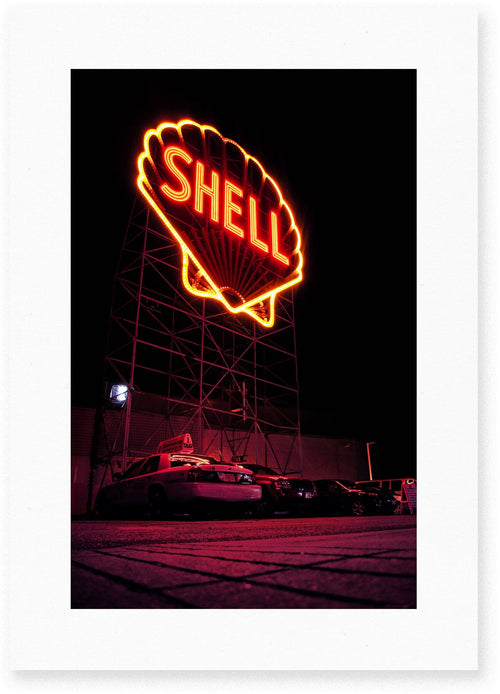
The most ordered models since January

Method: orders placed on thecoolrepublic.com from 1 January to 30 September 2026, counted by number of orders containing the product; only models still on sale are listed. Data updated quarterly.
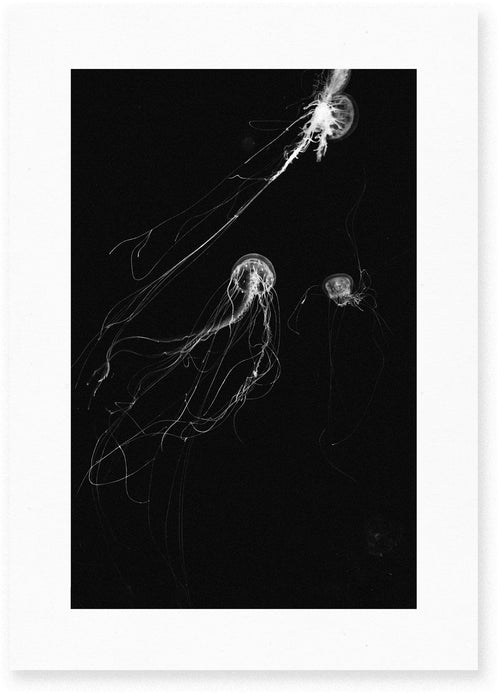
View the Posters collection →

The criteria that matter

The criteria that matter
CriterionWhat it changesKey figureThe pitfall
Paper size The frame to buy A3 = 29.7 x 42 cm, 50 x 70 = 50 x 70 cm (measure including border) Framing a 50 x 70 in an A2: 8 cm of paper too much
Mount One size up, distance for the image 5 to 8 cm margin, window 3 to 5 mm smaller than the paper A mount on a full-bleed poster, cutting into the motif
Hanging height Reading comfort Centre at 145-160 cm; 15 to 25 cm above a piece of furniture Frames hung at 175 cm, ceiling height
Width in relation to furniture Wall balance Two thirds of the width of the sofa or bed A single A3 above a 220 cm sofa
Spacing between frames Unity of the gallery wall 5 to 8 cm, constant Gaps that vary from 3 to 15 cm
Material and glass Style, weight, safety Aluminium 1.2 cm thick (Moebe), shatterproof Plexiglas (Hübsch Studio) Glass pane above a child's bed
Poster paper Hold and durability 250 to 300 g (Le Renard 300 g, The Poster Club 265 g, PSTR Studio 250 g) A thin poster that warps under the glass

Model comparison

ModelPricePaper formatOverall dimensionsMaterialGlazingRecommended use
Hanging design frame Frame Chrome A5 €23,00n/an/an/an/an/a
Hanging design frame Frame Oak A4 €37,00n/an/an/an/an/a
Hanging design frame Frame oak A3 €48,99n/an/an/an/an/a
Designer hanging frame Frame oak A2 €62,90n/an/an/an/an/a
Studio frame 50x70 Natural €60,00n/an/an/an/an/a
Hanging Frame L Brass €44,00n/an/an/an/an/a
Grand Bleu poster €22,50n/an/an/an/an/a
Poster Anouk 30 x 40 cm Wine & Flowers €22,50n/an/an/an/an/a
Poster 70 x 100 cm SCULPTURAL 03 €83,40n/an/an/an/an/a

Prices shown are the catalogue prices at the time you read this page.

Which brand to choose

Moebe

Scandinavian shelves, posters and decoration

See the Moebe brand →
Le Renard

At the origin of Le Renard: a collective of design and photography enthusiasts, brought together to offer numbered, limited edition photographic prints, read...

See the Le Renard brand →
PSTR Studio

PSTR Studio is a brand from the Netherlands specialising in the sale of high-quality art posters and prints.

Hübsch

Danish design guided by joie de vivre

See the Hübsch brand →

Mistakes to avoid

  • Buying a 30 × 40 frame for an A3 poster: 2 cm short in height, the poster is cut or folded.
  • Framing a 50 × 70 in an A2 frame (42 × 59.4 cm): 8 cm of paper too much.
  • Hanging frames too high, centre at 170 cm and above: you have to tilt your head up to look at them.
  • A single small A4 frame above a 200 cm sofa: the composition should cover 130 to 150 cm.
  • Irregular gaps in a gallery wall: keep 5 to 8 cm constant, measured with a tape measure, not by eye.
  • Drilling before testing the composition with paper templates taped to the wall.
  • Placing a giclée print facing a south-facing window without protection: the colours fade within a few seasons.

Frequently asked questions

What size frame for an A3 photo?
An A3 photo or poster measures 29.7 × 42 cm (ISO 216 standard). Without a mount, choose an A3 frame, whose overall dimensions are slightly larger, 31.7 × 44 cm for the Moebe Frame. With a mount, go up one size: A2 frame (42 × 59.4 cm) or 40 × 50 cm frame, with a 5 to 8 cm margin around the image.
What size frame for a 13 × 18 photo?
A 13 × 18 cm photo fits edge-to-edge in a 13 × 18 frame, or with a mount in a 20 × 30 cm frame, which leaves a 3.5 to 6 cm margin around the image. A 20 × 26 cm frame, such as the brass model by Nordal, also works with a narrower margin. The mount covers 3 to 5 mm of the photo per edge.
What size for a photo frame?
Frame size depends on the print format: 10 × 15, 13 × 18, 15 × 21 or 20 × 30 cm for photos, A4 or A3 for prints. Edge-to-edge, choose the exact paper size; with a mount, choose the size above, for example 20 × 30 cm for a 13 × 18 photo. Measure the paper, not just the image.
What are the standard frame sizes?
Ready-made frames follow three series: ISO 216 A formats (A5 14.8 × 21, A4 21 × 29.7, A3 29.7 × 42, A2 42 × 59.4 cm), poster formats 30 × 40, 40 × 50, 50 × 70 and 70 × 100 cm, and photo formats 10 × 15, 13 × 18 and 20 × 30 cm. A standard glazed frame refers to one of these.
How to choose the size of a photo frame?
Measure the paper including the border, then decide on the mounting. Edge-to-edge, the frame matches the exact paper size; with a mount, it is one size up, with a 5 to 8 cm margin. Then consider the wall: a single frame above a sofa should cover two-thirds of its width, which often requires a 50 × 70 or 70 × 100 cm.
At what height to hang a frame on a wall?
The centre of the frame is positioned between 145 and 160 cm from the floor, eye level for a standing adult; museums typically use around 145 cm. In a living room where people sit, lower it to 140 to 145 cm. Above furniture, disregard this rule and leave 15 to 25 cm between the sofa back, headboard or surface and the bottom of the frame.
What size poster above a sofa?
The composition, one frame or several, covers approximately two-thirds of the sofa's width: 130 to 150 cm for a 200 cm sofa. A single frame therefore requires a 70 × 100 cm format hung horizontally; alternatively, combine two 50 × 70 or a group of five A2, A3 and A4 frames spaced 5 to 8 cm apart, 15 to 25 cm above the backrest.